|
|
Welcome!
Arfvedsonite
Posted by Rock Currier
|
Re: Arfvedsonite June 20, 2012 08:20AM |
|
Registered: 7 years ago Posts: 515 |
|
|
Re: Arfvedsonite June 20, 2012 12:08PM |
|
Registered: 7 years ago Posts: 1,315 |
Hi Tom and Wayne,
> "I must agree with Wayne, you have collected some very nice Afrvedsonite from Hurricane Mt."
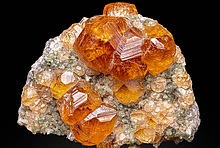
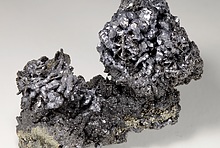
Thank you both, you have given me kind but undue credit for having collected these specimens. I have personally collected at Hurricane Mt. only 3 times. My self collected Arfvedsonites are a maximum of about 3cm and only a few are terminated nicely. I am proud of them nonetheless. Some of the very best specimens I have in my collection are the specimens pictured in this thread and all of these are specimens collected by either Ken Canning, Sr. or Ernie Schlichter, both well known New England collectors who have since passed away. I do have in my collection an Arfvedsonite specimen that I consider quite important, one that was field collected by Peter Samuelson, then went to Ernie Schlichter and finally I obtained it from Ernie. The specimen is nearly matrix free and weighs about 10 ounces. The maximum dimensions are a staggering 11.5 x 4.0 x 3.5 cm. I will try to image and upload this specimen sometime this week.
Best Regards,
Ron
Edited 1 time(s). Last edit at 06/20/2012 04:58PM by Ronald John Gyllenhammer.
> "I must agree with Wayne, you have collected some very nice Afrvedsonite from Hurricane Mt."
Thank you both, you have given me kind but undue credit for having collected these specimens. I have personally collected at Hurricane Mt. only 3 times. My self collected Arfvedsonites are a maximum of about 3cm and only a few are terminated nicely. I am proud of them nonetheless. Some of the very best specimens I have in my collection are the specimens pictured in this thread and all of these are specimens collected by either Ken Canning, Sr. or Ernie Schlichter, both well known New England collectors who have since passed away. I do have in my collection an Arfvedsonite specimen that I consider quite important, one that was field collected by Peter Samuelson, then went to Ernie Schlichter and finally I obtained it from Ernie. The specimen is nearly matrix free and weighs about 10 ounces. The maximum dimensions are a staggering 11.5 x 4.0 x 3.5 cm. I will try to image and upload this specimen sometime this week.
Best Regards,
Ron
Edited 1 time(s). Last edit at 06/20/2012 04:58PM by Ronald John Gyllenhammer.
|
|
Re: Arfvedsonite June 20, 2012 03:59PM |
|
Registered: 7 years ago Posts: 1,315 |
|
Re: Arfvedsonite June 20, 2012 09:11PM |
|
Registered: 7 years ago Posts: 515 |
|
Re: Arfvedsonite June 21, 2012 02:48AM |
|
Registered: 6 years ago Posts: 763 |
|
Re: Arfvedsonite June 21, 2012 12:33PM |
|
Registered: 7 years ago Posts: 301 |
Rock,
I would just like to add some information to the Mont Saint-Hilaire arfvedsonite or rather arfvedsonites. Recent analytical work (yet unpublished) on MSH amphiboles confirmed the following valid species:
Arfvedsonite
Magnesio-arfvedsonite
Fluoro-magnesio-arfvedsonite
Fluoro-potassic-magnesio-arfvedsonite
Potassic-magnesio-arfvedsonite
In addition there are at least 5 unapproved "named amphiboles" with arfvedsonite root names, which are potentially new species. Based on this recent work, arfvedsonite sensu stricto (s.s.) is actually uncommon, which is at variance with earlier, rather scant data (Horváth & Gault 1990 etc.). There is no way to visually identify any of these species and when labeling specimens one should bear this in mind. Existing labels on specimens, unless specifically analyzed, are most likely wrong. As with large groups like the Eudialyte group unanalyzed specimens should be labeled to reflect that (i.e. eudialyte group). Arfvedsonite series or arfvedsonite sunsu lato (s.l.) on the labels may be the preferrable way to go.
Laszlo
I would just like to add some information to the Mont Saint-Hilaire arfvedsonite or rather arfvedsonites. Recent analytical work (yet unpublished) on MSH amphiboles confirmed the following valid species:
Arfvedsonite
Magnesio-arfvedsonite
Fluoro-magnesio-arfvedsonite
Fluoro-potassic-magnesio-arfvedsonite
Potassic-magnesio-arfvedsonite
In addition there are at least 5 unapproved "named amphiboles" with arfvedsonite root names, which are potentially new species. Based on this recent work, arfvedsonite sensu stricto (s.s.) is actually uncommon, which is at variance with earlier, rather scant data (Horváth & Gault 1990 etc.). There is no way to visually identify any of these species and when labeling specimens one should bear this in mind. Existing labels on specimens, unless specifically analyzed, are most likely wrong. As with large groups like the Eudialyte group unanalyzed specimens should be labeled to reflect that (i.e. eudialyte group). Arfvedsonite series or arfvedsonite sunsu lato (s.l.) on the labels may be the preferrable way to go.
Laszlo
|
|
Re: Arfvedsonite June 21, 2012 01:51PM |
|
Registered: 5 years ago Posts: 602 |
|
Re: Arfvedsonite June 21, 2012 07:15PM |
|
Registered: 7 years ago Posts: 515 |
|
Re: Arfvedsonite June 21, 2012 07:29PM |
Registered: 7 years ago Posts: 95 |
Re:” Arfvedsonite, United States, New Hampshire, Carroll County, near Moultonboro, at Red Hill”
Pirsson and Washington authored a comprehensive article “On Red Hill, Moultonboro, NH” in the “American Journal of Science” 1907, v. 27, pgs 257-275, 433-447). The article has three notations of arfvedsonite:
pg 264, “The rock in the quarry in the field opposite the Horne farmhouse is cut by an aplitic dike of about six inches wide of a light gray. It is an arfvedsonitic liparase or paisanite.”
pg 266, “cataphorite-arfvedsonite” observed in microscopic thin sections from the Horne quarry rock.
pg 268, “the hornblende of the Red Hill rock is probably near cataphorite, at times inclining to arfvedsonite.”
None of these notations would seem to be a ringing endorsement for anything more than microscopic arfvedsonite occurring at Red Hill. New Hampshire collectors label the abundant Red Hill black amphibole as hastingsite, following the study by Quinn (“Petrology of the Alkaline Rocks at Red Hill, New Hampshire’ Bulletin, Geological Society of America v.48, 1937, p. 373-402.), and referenced by Meyers and Stewart, p. 8, “Quinn has shown that it (hastingsite) is quite abundant in the outer coarse syenite and nepheline-sodalite syenite of Red Hill, while large bladed hastingsite , 2x6 centimeters is present in the amphibole pegmatite of the area.”
Edited 1 time(s). Last edit at 06/21/2012 07:53PM by Tom Mortimer.
Pirsson and Washington authored a comprehensive article “On Red Hill, Moultonboro, NH” in the “American Journal of Science” 1907, v. 27, pgs 257-275, 433-447). The article has three notations of arfvedsonite:
pg 264, “The rock in the quarry in the field opposite the Horne farmhouse is cut by an aplitic dike of about six inches wide of a light gray. It is an arfvedsonitic liparase or paisanite.”
pg 266, “cataphorite-arfvedsonite” observed in microscopic thin sections from the Horne quarry rock.
pg 268, “the hornblende of the Red Hill rock is probably near cataphorite, at times inclining to arfvedsonite.”
None of these notations would seem to be a ringing endorsement for anything more than microscopic arfvedsonite occurring at Red Hill. New Hampshire collectors label the abundant Red Hill black amphibole as hastingsite, following the study by Quinn (“Petrology of the Alkaline Rocks at Red Hill, New Hampshire’ Bulletin, Geological Society of America v.48, 1937, p. 373-402.), and referenced by Meyers and Stewart, p. 8, “Quinn has shown that it (hastingsite) is quite abundant in the outer coarse syenite and nepheline-sodalite syenite of Red Hill, while large bladed hastingsite , 2x6 centimeters is present in the amphibole pegmatite of the area.”
Edited 1 time(s). Last edit at 06/21/2012 07:53PM by Tom Mortimer.
|
Re: Arfvedsonite June 21, 2012 08:16PM |
Registered: 7 years ago Posts: 95 |
The given arfvedsonite reference for Myers and Stewart (1956) “The Geology of New Hampshire -- Part III, Minerals and Mines” pg 55, may be incorrect. My fifth printing edition (1977) has no reference for arfvedsonite on page 55, although (on this page) Red Hill is noted within the discussion of “SPHENE (Titanite).”
This fifth edition makes no mention of New Hampshire arfvedsonite in its discussion of the amphibole mineral group, pgs 7 – 10.
|
Re: Arfvedsonite June 22, 2012 08:59AM |
|
Registered: 7 years ago Posts: 515 |
Tom,
Thank you for your input, much appreciated. What you say is very much in line with new literature as well, see William B.Size (1972) Petrology of the Red Hill Syenitic Complex, New Hampshire Geological Society of America Bulletin, December 1972, v. 83, no. 12, p. 3747-3760. and also Deer, Howie and Sussman, rock forming minerals- double chain silicates, page 455. The amphibole composition in the various rocks of the Red Hill Complex is not straight forward.
On a general basis, I try to find modern ( i.e post 1980) references for amphiboles as the older references ( pre-1950) tend to rely heavily on optical properties for amphibole identification, but in this case newer and older literature are aligned.
Based on your input, I have removed the Red Hill entry in this article, and I think that an update of the Red Hill locality page should be done as well. As I am not at all familiar with the area, I would appreciate if you could comment on the following:
1) Are the large crystals found in association with "the outher coarse syenite", or associated with the nepheline-sodalite syenite? According to Deer et all ( see above), the amphiboles of the nepheline-sodalite syenite "range from ferropargasite through magnesiohastingsite to hastingsite, to taramite and katophorite". This may seem as a big range of different amphiboles, but in reality it may only describe small changes in the Al/Fe3+, Mg/Fe2+ and Na/Ca ratios.
2) Do you agree that the arfvedsonite entry should cange status to "erroneously reported" on the locality page?
Thanks
Olav
Thank you for your input, much appreciated. What you say is very much in line with new literature as well, see William B.Size (1972) Petrology of the Red Hill Syenitic Complex, New Hampshire Geological Society of America Bulletin, December 1972, v. 83, no. 12, p. 3747-3760. and also Deer, Howie and Sussman, rock forming minerals- double chain silicates, page 455. The amphibole composition in the various rocks of the Red Hill Complex is not straight forward.
On a general basis, I try to find modern ( i.e post 1980) references for amphiboles as the older references ( pre-1950) tend to rely heavily on optical properties for amphibole identification, but in this case newer and older literature are aligned.
Based on your input, I have removed the Red Hill entry in this article, and I think that an update of the Red Hill locality page should be done as well. As I am not at all familiar with the area, I would appreciate if you could comment on the following:
1) Are the large crystals found in association with "the outher coarse syenite", or associated with the nepheline-sodalite syenite? According to Deer et all ( see above), the amphiboles of the nepheline-sodalite syenite "range from ferropargasite through magnesiohastingsite to hastingsite, to taramite and katophorite". This may seem as a big range of different amphiboles, but in reality it may only describe small changes in the Al/Fe3+, Mg/Fe2+ and Na/Ca ratios.
2) Do you agree that the arfvedsonite entry should cange status to "erroneously reported" on the locality page?
Thanks
Olav
|
Re: Arfvedsonite June 22, 2012 09:25AM |
|
Registered: 7 years ago Posts: 515 |
|
Re: Arfvedsonite June 22, 2012 11:12AM |
Registered: 3 years ago Posts: 533 |
|
Re: Arfvedsonite June 22, 2012 11:49AM |
|
Registered: 7 years ago Posts: 515 |
Spencer,
I am not aware of any analysis done on the hornblende from Stussdalen, but older analysis from similar occurances in the same area indicates that the amphiboles are somewhere inbetween actinolite and magnesiohornblende, sometimes also with a small edenite component. i.e a little bit Na in the A posiition, mostly Ca in the B position, Mg>>Fe>0 in the C position and sufficient Al to make the composition near borderline between actinolite and magnesiohornblende.
I think hornblende is a perfectly good name to put on the label.
Olav
I am not aware of any analysis done on the hornblende from Stussdalen, but older analysis from similar occurances in the same area indicates that the amphiboles are somewhere inbetween actinolite and magnesiohornblende, sometimes also with a small edenite component. i.e a little bit Na in the A posiition, mostly Ca in the B position, Mg>>Fe>0 in the C position and sufficient Al to make the composition near borderline between actinolite and magnesiohornblende.
I think hornblende is a perfectly good name to put on the label.
Olav
|
|
Re: Arfvedsonite June 22, 2012 03:02PM |
|
Registered: 7 years ago Posts: 1,315 |
Hi Olav,
> "Based on the infomation provided by Tom Mortiner, I hope you don't mind that I removed the Red Hill entry from the article."
I completely agree. The line I wrote in the Red Hill entry, "Specimens from this location seem extremely limited and unavailable to observe or characterize." says it all. My entry on Red Hill was more or less intended to be thorough and address it's proported existence only and since this is a "Best Minerals" article, the Red Hill entry is neither relevant nor necessary here.
Ron
EDIT: Additionally, the following text "The crystals observed ranged in size from 1cm to 5cm, although longer prisms have been observed. The largest crystals of Arfvedsonite observed were about 5.0 cm long with one specimen being over 2.0 cm wide." could be changed to read, " Most crystals observed ranged in size from 1cm to 5cm long, although longer prisms have been observed. The largest crystal of Arfvedsonite observed measured approximately 11.5 x 4.0 x 3.5 cm.
Edited 1 time(s). Last edit at 06/22/2012 03:37PM by Ronald John Gyllenhammer.
> "Based on the infomation provided by Tom Mortiner, I hope you don't mind that I removed the Red Hill entry from the article."
I completely agree. The line I wrote in the Red Hill entry, "Specimens from this location seem extremely limited and unavailable to observe or characterize." says it all. My entry on Red Hill was more or less intended to be thorough and address it's proported existence only and since this is a "Best Minerals" article, the Red Hill entry is neither relevant nor necessary here.
Ron
EDIT: Additionally, the following text "The crystals observed ranged in size from 1cm to 5cm, although longer prisms have been observed. The largest crystals of Arfvedsonite observed were about 5.0 cm long with one specimen being over 2.0 cm wide." could be changed to read, " Most crystals observed ranged in size from 1cm to 5cm long, although longer prisms have been observed. The largest crystal of Arfvedsonite observed measured approximately 11.5 x 4.0 x 3.5 cm.
Edited 1 time(s). Last edit at 06/22/2012 03:37PM by Ronald John Gyllenhammer.
|
Re: Arfvedsonite June 22, 2012 06:20PM |
Registered: 7 years ago Posts: 95 |
Olav,
Large black amphibole crystals are quite abundant in the "the outer coarse syenite", of the Red Hill complex. New Hampshire collectors have taken these to be the hastingsite of Quinn. I have personally collected many specimens, (photo below – 3 cm crystal section in syenite). All that I have found are fully embedded in the syenite, resulting in specimens of broken hastingsite sections. I have not seen the 1972 William Size reference; I will try and track it down.
As far as the arfvedsonite being “erroneously reported” from Red Hill, given the complex chemistry of this group it is certainly possible that the report by Pirsson and Washington that arfvedsonite was observed in thin sections of the Horne Quarry rock may be valid.
Edited 1 time(s). Last edit at 06/22/2012 10:46PM by Tom Mortimer.
Large black amphibole crystals are quite abundant in the "the outer coarse syenite", of the Red Hill complex. New Hampshire collectors have taken these to be the hastingsite of Quinn. I have personally collected many specimens, (photo below – 3 cm crystal section in syenite). All that I have found are fully embedded in the syenite, resulting in specimens of broken hastingsite sections. I have not seen the 1972 William Size reference; I will try and track it down.
As far as the arfvedsonite being “erroneously reported” from Red Hill, given the complex chemistry of this group it is certainly possible that the report by Pirsson and Washington that arfvedsonite was observed in thin sections of the Horne Quarry rock may be valid.
Edited 1 time(s). Last edit at 06/22/2012 10:46PM by Tom Mortimer.
|
Re: Arfvedsonite June 26, 2012 11:34AM |
|
Registered: 7 years ago Posts: 515 |
|
|
Re: Arfvedsonite June 27, 2012 10:56AM |
Registered: 7 years ago Posts: 8,489 |
Copyright © Jolyon Ralph and Ida Chau 1993-2013. Site Map.
Locality, mineral & photograph data are the copyright of the individuals who submitted them. Site hosted & developed by Jolyon Ralph.
Mindat.org is an online information resource dedicated to providing free mineralogical information to all. Mindat relies on the contributions of thousands of members and supporters. Mindat does not offer minerals for sale. If you would like to add information to improve the quality of our database, then click here
to register.
Current server date and time: 24th May 2013 10:42:41
Mindat Lightbox
Options| Fade toolbar when not in focus | Fix toolbar to bottom of page | ||
|---|---|---|---|
| Hide Social Media Links | |||
| Slideshow frame delay | seconds | ||
New Locality Added: Attu, Pargas (Parainen), Southwestern Finland Region, FinlandFrom Ilkka Mikkola, 24th May 2013 06:15:27