Home PageAbout MindatThe Mindat ManualHistory of MindatCopyright StatusWho We AreContact UsAdvertise on Mindat
Donate to MindatCorporate SponsorshipSponsor a PageSponsored PagesMindat AdvertisersAdvertise on Mindat
Learning CenterWhat is a mineral?The most common minerals on earthInformation for EducatorsMindat ArticlesThe ElementsThe Rock H. Currier Digital LibraryGeologic Time
Minerals by PropertiesMinerals by ChemistryAdvanced Locality SearchRandom MineralRandom LocalitySearch by minIDLocalities Near MeSearch ArticlesSearch GlossaryMore Search Options
The Mindat ManualAdd a New PhotoRate PhotosLocality Edit ReportCoordinate Completion ReportAdd Glossary Item
Mining CompaniesStatisticsUsersMineral MuseumsClubs & OrganizationsMineral Shows & EventsThe Mindat DirectoryDevice SettingsThe Mineral Quiz
Photo SearchPhoto GalleriesSearch by ColorNew Photos TodayNew Photos YesterdayMembers' Photo GalleriesPast Photo of the Day GalleryPhotography
╳Discussions
💬 Home🔎 Search📅 LatestGroups
EducationOpen discussion area.Fakes & FraudsOpen discussion area.Field CollectingOpen discussion area.FossilsOpen discussion area.Gems and GemologyOpen discussion area.GeneralOpen discussion area.How to ContributeOpen discussion area.Identity HelpOpen discussion area.Improving Mindat.orgOpen discussion area.LocalitiesOpen discussion area.Lost and Stolen SpecimensOpen discussion area.MarketplaceOpen discussion area.MeteoritesOpen discussion area.Mindat ProductsOpen discussion area.Mineral ExchangesOpen discussion area.Mineral PhotographyOpen discussion area.Mineral ShowsOpen discussion area.Mineralogical ClassificationOpen discussion area.Mineralogy CourseOpen discussion area.MineralsOpen discussion area.Minerals and MuseumsOpen discussion area.PhotosOpen discussion area.Techniques for CollectorsOpen discussion area.The Rock H. Currier Digital LibraryOpen discussion area.UV MineralsOpen discussion area.Recent Images in Discussions






Fakes & FraudsAfrican Moldavite??

25th Feb 2007 00:33 UTCMike the Nobody

25th Feb 2007 01:57 UTCPaul L. Boyer
25th Feb 2007 02:33 UTCJames Gates
25th Feb 2007 02:40 UTCAlfredo Petrov Manager
Beware also of "Tibetan tektites"!
8th Mar 2007 23:47 UTCtomGG
For Obsidian the RI = 1.480-1.510 and SG=2.33-2.50
For Libyan Desert Glass RI=1.460 SG=2.20.
See the GIA Gem Reference Guide pages 132-134.
The two pieces of African Moldavite I tested had RI = 1.518 to 1.529 and SG = 2.46-2.48. The African Moldavite seems too heavy and has too high of indices of refraction to be natural glass.
Tom Ph.D. Graduate Gemologist.
12th Apr 2007 03:19 UTCChristine (Chris.) Johnson
A bit like after Mt St Helens blew, shops here were full of lovely smooth, clear polished blue glass, which was claimed to be obsidian from that volcano ... yeah sure, as if! This same Mt St Helens rubbish also reappeared after Ruapehu erupted in 1995/6. Unfortunately, the new age shop owners don't know any difference.
Chris. J
23rd May 2007 12:18 UTCMme Ndiaye

23rd May 2007 12:40 UTCDavid Von Bargen Manager
23rd May 2007 13:28 UTCjacques jedwab
26th Oct 2008 00:22 UTCMirabai
26th Oct 2008 01:25 UTCAlfredo Petrov Manager
26th Oct 2008 20:02 UTCAlfredo Petrov Manager
10th Jan 2010 20:21 UTCBob K

10th Jan 2010 20:55 UTCRob Woodside 🌟 Manager

10th Jan 2010 23:41 UTCAdam Kelly
Usually yellow in color, it was used to make scarabs in the headpiece fro King Tut.
They have not pinpointed the cause of it as of yet, but due to inclusions in is believed meteor related.
P.S. it looks nothing like "african moldavite" which screams fake
11th Jan 2010 00:02 UTCRob Woodside 🌟 Manager
11th Jan 2010 00:31 UTCAdam Kelly
I have one that is about the color of amber, but has blue "flashes" of color due to apparently very rare inclusions.
I have handeled many kilos of this material and only seen two pieces, mine being the better.
I also have a large, but pale and milky one for trade.
11th Jan 2010 01:56 UTCRob Woodside 🌟 Manager
11th Jan 2010 04:22 UTCStephanie Martin
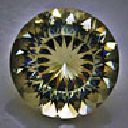
Re: other Moldavite - There is another trade name circulating called "White Moldavite" which is not even a tecktite at all! It is treated calcite, from the Mohave Desert in Arizona. There is also Moldavite incense and Moldavite oil, both containing "Essence of Moldavite". Perhaps I could interest you in some Moldavite from my fridge, growing on my cheese.
Caveat Emptor...
11th Jan 2010 04:24 UTCJamey Swisher
11th Jan 2010 13:31 UTCAlfredo Petrov Manager
13th Jan 2010 01:18 UTCJamey Swisher
Honestly I have no reason to doubt my miner friends. We have known them and dealt with them for years. We have purchased everything from rough tanzanite to faceted untreated Pad Sapphires and they have never misrepresented anything in all the years dealing with them.
That said, I never bothered to purchase any of the green obsidian/glass. If I want to facet that stuff I will just buy some Helenite, it sells far quicker, lol. After all, glass is glass whether it is man-made or nature made, IMHO, still only glass when it comes right down to it.
14th Jan 2010 00:39 UTCAdam Kelly
thanks for the info.
I did not know they contained zircons.
Now I NEED to look at it under a microscope.
Rob,
Part of the reason I bought the piece,
is because this type of inclusion is interesting from a scientific standpoint.
I have seen wisps of similar inclusions, but mine is chock-full of it.
Making it priceless for study, I'l accept a personal check for one million. LOL
I know that they have not found an impact crater, which doesn't suprise me.
It's a big area with a lot of shifting sands, and the impact happened a long time ago.
So to awnser you question, no I don't know what they are...yet.
Jamey,
You should get one of these, get it tested, and shut me and Alfredo up about "green obsidian" once and for all.
16th Jan 2010 07:27 UTCJamey Swisher
8th Mar 2010 22:59 UTCRusty James
19th Apr 2010 16:48 UTCSunCrow
I has a large amount of chrome in it and that's what gives it its nice color. It is also from the Tanzania region. My educated guess is that it is volcanic glass. The other possibility is that it could be very ancient glass.
If the ebay person claimed that it was real moldavite then you where duped. So, it's a very misleading name, and may be deliberately misleading to supply the metaphysical sector with a stone they desire in ever greater quantities.
21st Apr 2010 10:29 UTCJamey Swisher
16th Sep 2011 05:48 UTCGreenxxStone
thanking you
Julie
16th Sep 2011 07:04 UTCVítězslav Snášel Expert
The name is derived from the name of the river in Czech rep. - Vltava (in German language Moldau)
http://en.wikipedia.org/wiki/Moldavite
So your stone from Africa(it's whatever) can not be moldavite!
Some Moldavite see here http://www.mindat.org/user-4870.html#2_0_10860_0_0_0_
Vita
16th Sep 2011 16:12 UTCHarald Schillhammer Expert
-------------------------------------------------------
> Moldavite (specific name for the variant tektites)
> comes from only one place on earth - the Czech
> Republic.
Well, sorry, but that's not 100% correct. Although the Czech Republic is definitely the major source of moldavites, they are also found in northern Lower Austria (in a gravel pit near Altenburg, if my memory does not cheat me). They are of the same origin but much rarer and smaller than the Czech ones.
Cheers
17th Sep 2011 04:12 UTCAlfredo Petrov Manager
17th Sep 2011 08:12 UTCVítězslav Snášel Expert
But never from AFRICA !!!!!
Vita
4th Oct 2011 06:51 UTCJamey Swisher
29th Jan 2012 10:51 UTCadriaan de jager37865/6/:6/6,;_
29th Jan 2012 11:13 UTCCraig Mercer
29th Jan 2012 18:02 UTCMandala Rain
They are not Herkimer Diamonds unless they are from Herkimer NY
It is not Champagne unless it is from that region in France,
and so on.
Anything else, even if it is a Tektite formed through a similar process, is NOT a moldavite.
29th Jan 2012 18:55 UTCAlfredo Petrov Manager
29th Jan 2012 20:29 UTCJason Evans
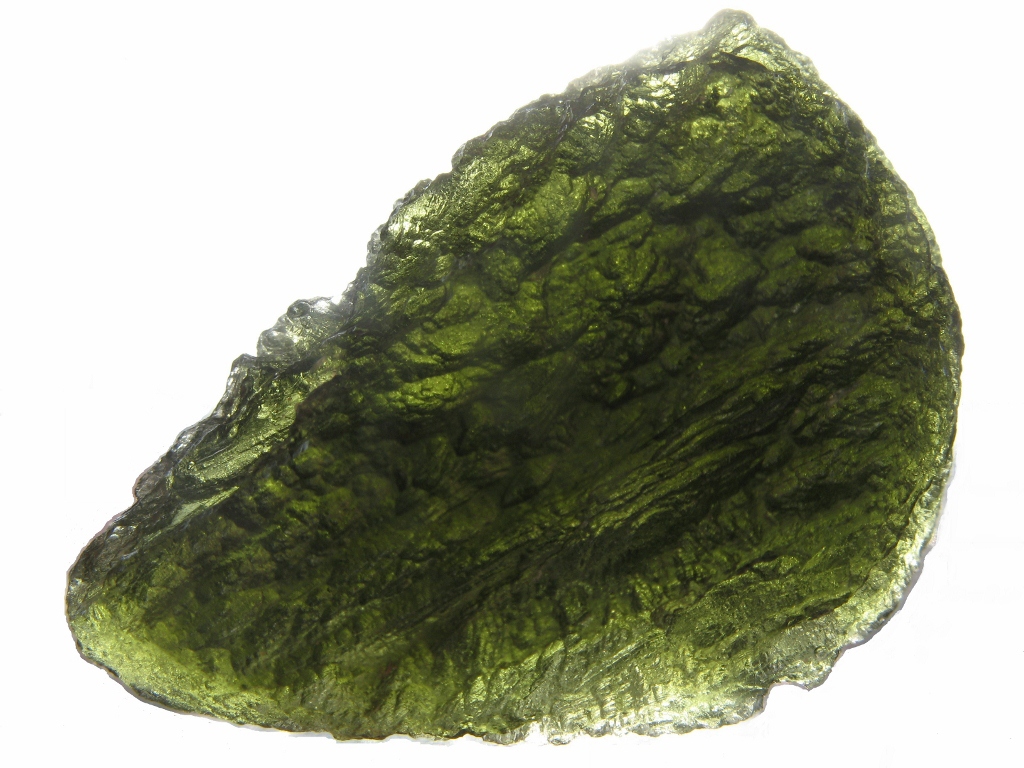
or this
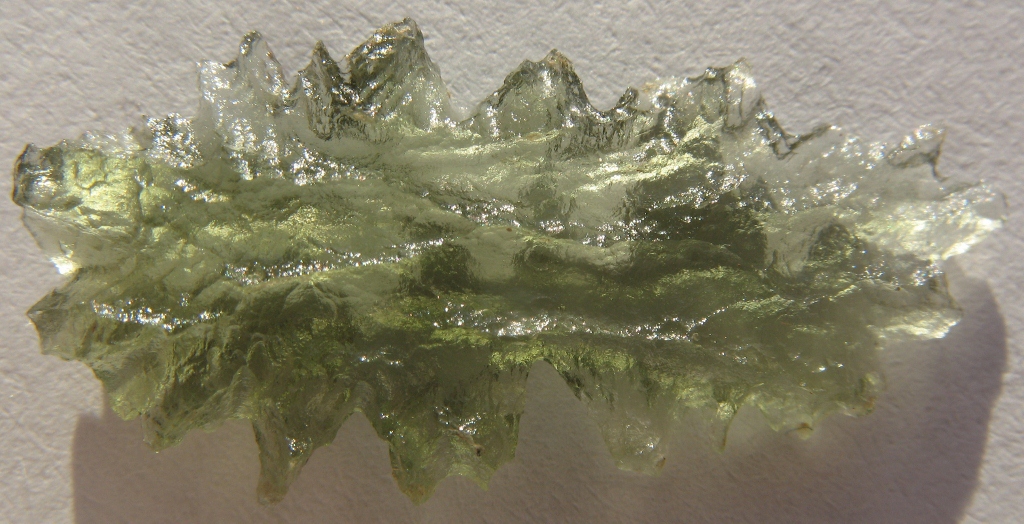
and isn't from the Czech republic, Austria or Germany it is not Moldavite!
And just for interest here is some Libyan desert glass

Here is a link to a fascinating documentary about LDG, maybe the one Rob was referring to?
http://www.disclose.tv/action/viewvideo/19274/Tutankhamun_s_Fireball__1_of_5_/
Its split into 5 parts, the other parts are also on that site, it's well worth watching it.
29th Jan 2012 20:46 UTCUwe Kolitsch Manager
Adriaan: what you have is simply green glass.
3rd Nov 2012 07:03 UTCEliot Masters
I have personally collected sizeable chunks of the green crystalline stone from a river-bed - nowhere near a 'jungle' and not that extremely remote, either.
though having no axe to grind myself (other than a gripe with the anti-African stereotypes which pervade Euro-American cultures), it would clearly behoove those of you who claim the stuff is 'glass' from the 'Ancient Egyptians' or like ballyhoo to test the stuff properly yourselves before spouting and crowing that others have 'been had'.
3rd Nov 2012 08:04 UTCAlfredo Petrov Manager
3rd Nov 2012 12:23 UTCOwen Lewis
I remember a discussion from elsewhere, a few years' back, which concluded that some 'Tsavorite' on offer by the 'miners' was in fact green glass of modern origin. Sometimes glass is easy to discriminate - and sometimes if is not. Resolution in that matter came through the polishing of a face on a couple of pieces and checking the RI.
Many Africans - not least many of those now labelled as Kenyan - are fiercely effective traders. One literally had the shirt off my back on one occasion:-D In my small experience, business ethics generally are those of market-places around the world. Caveat Emptor. There are persons that, in time, one comes to trust on personal basis. Much like home really - except that customer protection and legal remedies at home are *sometimes* more effective.
Alfredo Petrov Wrote:
-------------------------------------------------------
> ........ I've always been a bit amused
> when the Herkimer folks complain that diggers in
> other parts of the world are "unethical" when they
> call their quartz crystals "Herkimer diamonds".
> They call their quartz "diamonds" and then
> complain about misuse of the name "Herkimer"? Talk
> about the pot calling the kettle black!
:-) In general, it would probably be better not to associate localities with mineral varieties)IMHO) - but it's way too late to correct that tendency. What could - and I think should - be done is firmly to divorce the acceptable use of varietal names from any form of exclusive proprietorship, be it through the registering of a trade-name or simple local/regional protectionism. The sometimes used analogy to the protection of regional/locality status granted to wines is simply false for reasons that are largely self-evident and need not be not aired here.
'Herkimer Diamond' is a pretty name describing a sub-variety of naturally occurring Rock Crystal, occurring around the world. If not exactly a common-place, it is widely distributed and in some abundance. As Alfredo points out, there is (at the very least) 'poetic licence' in the arrogation of the species name 'Diamond' and this alone is sufficent to rob this particular varietal name of any honest local proprietorship.
A regional claim to 'Moldavite' is not so easy to dismiss though. Has tectite glass of this colour and physical properties ever been found elsewhere? If it has, then I'd vote for it being called Moldavite also - as descriptive of its properties and not of where it comes from. But, AFAIK, no one has found this stuff elsewhere.
The few pics put up in this topic of 'African Moldavite':-
- Do not look in the least like Moldavite.
- No evidence is offered that the pics are of a tectite glass.
- From memory only, the appearance of this 'African' material is not dissimilar to the stuff offered to others a while back as Tsavorite rough.
3rd Nov 2012 13:45 UTCUwe Kolitsch Manager
3rd Nov 2012 15:32 UTCEvan Johnson


Mindat.org is an outreach project of the Hudson Institute of Mineralogy, a 501(c)(3) not-for-profit organization.
Copyright © mindat.org and the Hudson Institute of Mineralogy 1993-2024, except where stated. Most political location boundaries are © OpenStreetMap contributors. Mindat.org relies on the contributions of thousands of members and supporters. Founded in 2000 by Jolyon Ralph.
Privacy Policy - Terms & Conditions - Contact Us / DMCA issues - Report a bug/vulnerability Current server date and time: April 23, 2024 13:25:19
Copyright © mindat.org and the Hudson Institute of Mineralogy 1993-2024, except where stated. Most political location boundaries are © OpenStreetMap contributors. Mindat.org relies on the contributions of thousands of members and supporters. Founded in 2000 by Jolyon Ralph.
Privacy Policy - Terms & Conditions - Contact Us / DMCA issues - Report a bug/vulnerability Current server date and time: April 23, 2024 13:25:19
Besednice moldavite occurrences, Besednice, Český Krumlov District, South Bohemian Region, Czech Republic